Surabaya, IT Journalistic — The Department of Information Technology (DTI) at Institut Teknologi Sepuluh Nopember (ITS) has developed an Internet of Things (IoT)-based emergency alert system called Panic Button to enhance community safety. This community service program was implemented in Wonorejo Subdistrict, Surabaya, targeting residents of RT 02 RW 03, with approximately 300 beneficiaries. Developed by a team of DTI ITS lecturers, including Ridho Rahman Hariadi, S.Kom., M.Sc., Fuad Dary Rosyadi, S.Kom., M.Kom., and Ir. Muchammad Husni, M.Kom., the system is designed to help residents respond to various emergency situations more quickly and in a coordinated manner.
The program was initiated in response to the community’s need for an emergency reporting mechanism capable of reaching multiple people within a short period. Previously, emergency information was often communicated through personal messages or WhatsApp groups, which did not guarantee that all relevant parties would receive the information promptly. To address this challenge, the DTI ITS team introduced the Panic Button, which allows residents to send emergency alerts simply by pressing a button through the application. The available emergency categories can be customized to suit the community’s needs, including theft, physical altercations, fires, and the presence of wild animals.
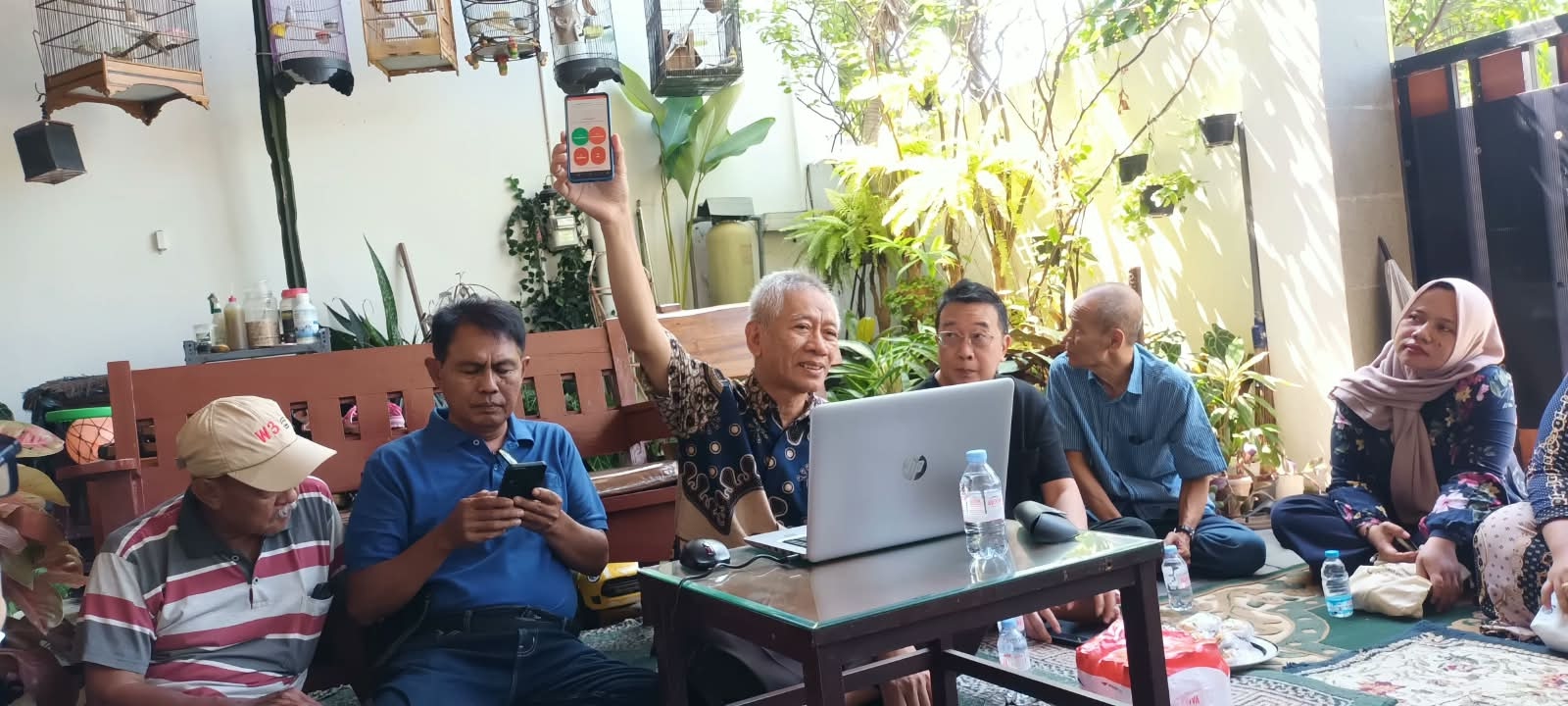
Ir. Muchammad Husni, M.Kom., introduces the IoT-based Panic Button system as an emergency alert mechanism for the local community
The Panic Button system consists of four main components: a web-based Panic Admin platform, a Panic Button mobile application, an Android-based Panic Speaker application, and a Panic Speaker Station hardware device. Through the website, community administrators, such as neighborhood (RT) and community (RW) leaders, as well as community organization representatives, can manage residents’ data, add emergency categories, and configure notifications to be received. When a resident presses the emergency button through the mobile application, the alert is forwarded to community administrators or security personnel through the Panic Speaker application. In addition, the Panic Speaker Station, installed at security posts or community halls, can broadcast audible alerts to ensure that nearby residents are immediately notified of an emergency.
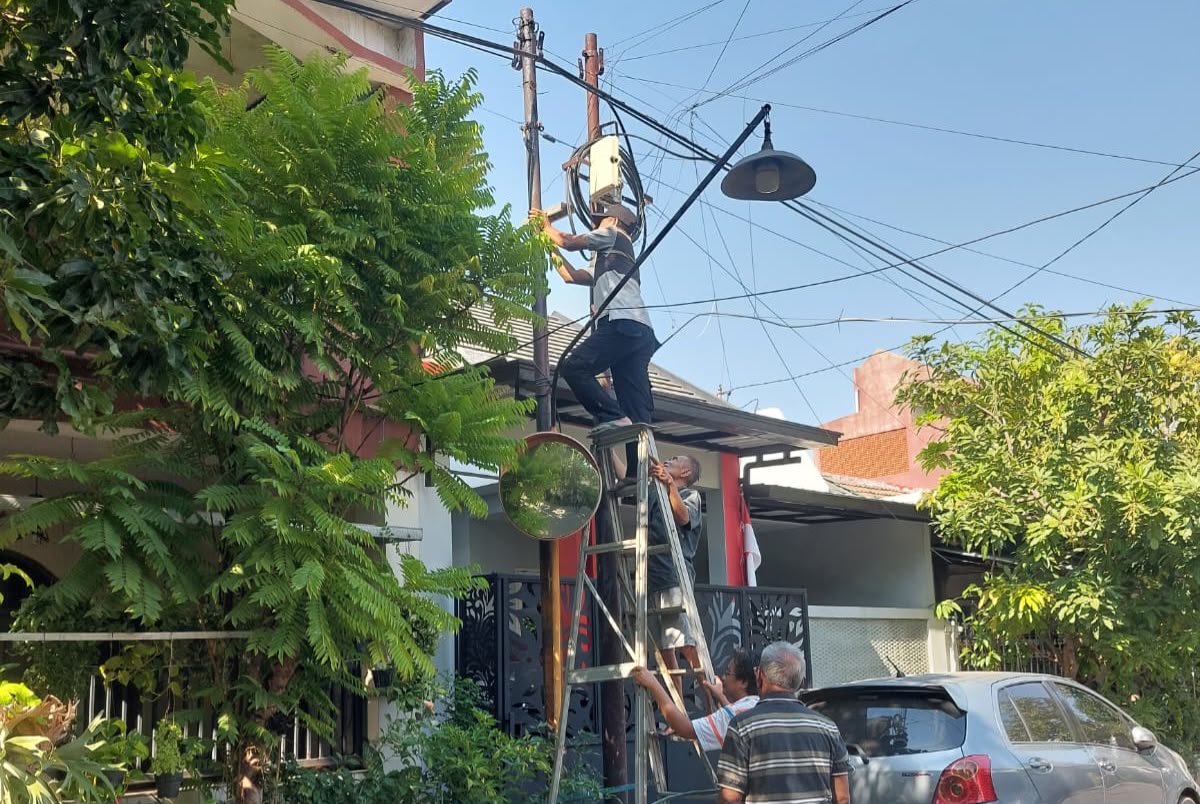
The installation of the Panic Button system for local residents as part of the implementation of community safety technology.
The community service program was carried out with the involvement of DTI ITS lecturers and students. Activities included socialization sessions, discussions with residents, assistance in using the application, and system maintenance. Beyond introducing the technology, the team also helped residents and community administrators understand how to use and independently manage the system. Assistance was provided over approximately three to six months to ensure that the system could function properly and meet the community’s needs.
During the implementation process, the DTI ITS team also gathered feedback from residents to further improve the system. The feedback covered adjustments to emergency button categories, alert sound characteristics, volume settings, and application usability. According to Ridho Rahman Hariadi, S.Kom., M.Sc., the system is continuously developed based on the specific needs of each community. Through discussions and assistance in Wonorejo, the system has undergone ongoing improvements to better suit users’ needs and become easier for residents to operate.
One of the key aspects of this initiative is ensuring the system’s long-term sustainability within the community. The management of the Panic Button system does not entirely depend on the DTI ITS community service team. Following its implementation, community administrators can independently manage residents’ data, configure emergency categories, and follow up on incoming notifications. Meanwhile, the DTI ITS team continues to maintain the system, particularly its server infrastructure, to ensure reliable service and support its continued use by the community.
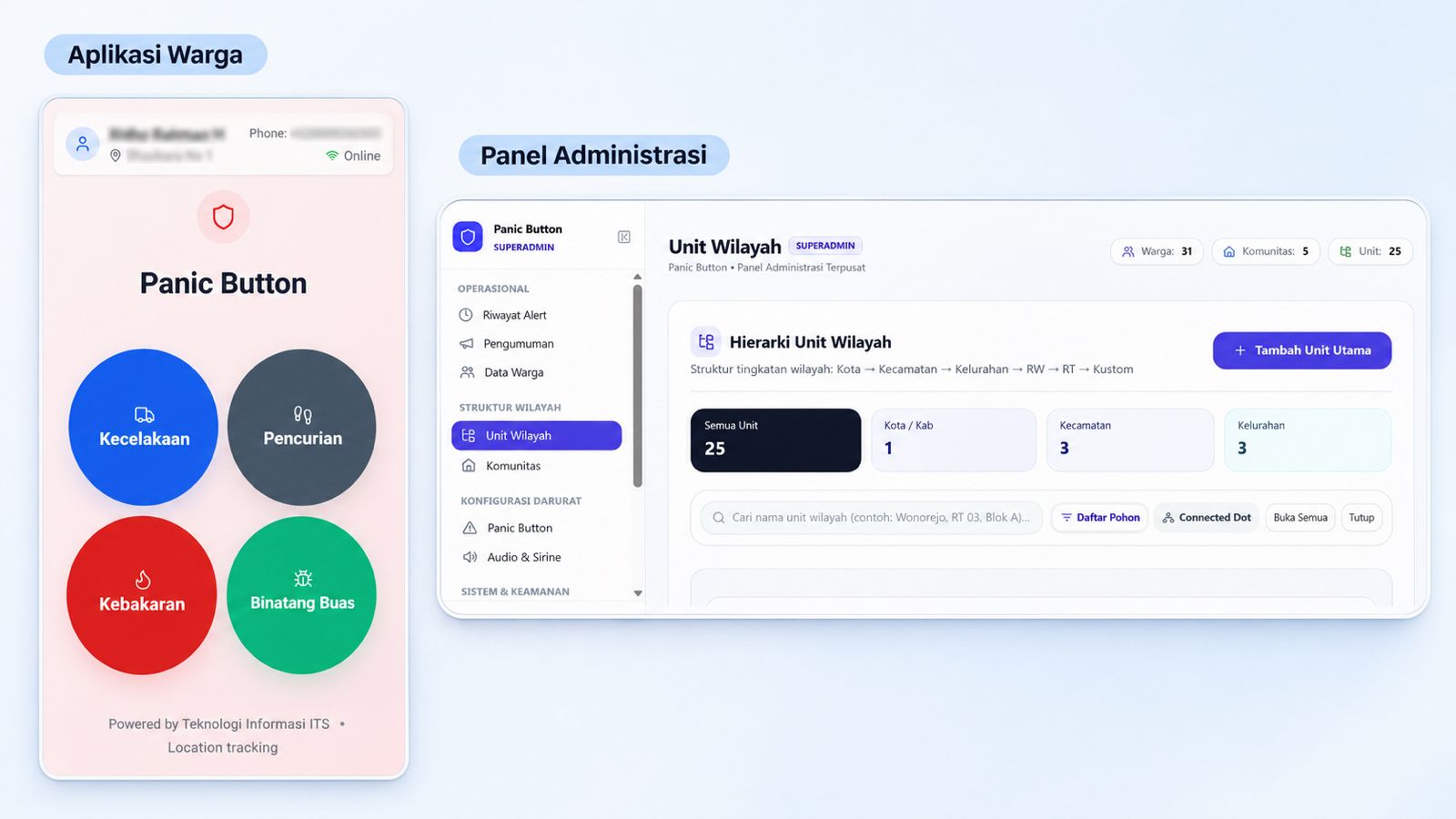
The Panic Button application for residents and its administrative dashboard, designed to simplify data management and emergency information dissemination within the community.
Looking ahead, DTI ITS welcomes opportunities for other communities interested in implementing the Panic Button system. Further development can also be carried out to accommodate users’ needs, including feature optimization and improvements in user-friendliness. Through this initiative, DTI ITS not only provides a technological solution to community safety challenges but also promotes the practical application of science and technology to deliver tangible benefits to society.
Contributions to the Sustainable Development Goals (SDGs)
This community service initiative conducted by DTI ITS contributes to several Sustainable Development Goals, particularly:
-
SDG 9: Industry, Innovation and Infrastructure, through the development of an IoT-based emergency alert system as a technological innovation that supports community safety infrastructure.
-
SDG 11: Sustainable Cities and Communities, through the provision of an emergency communication platform that helps improve preparedness and safety in residential areas.
-
SDG 16: Peace, Justice and Strong Institutions, through strengthening coordination among residents, community administrators, and security personnel in responding to emergency situations.
Through the development and implementation of the Panic Button system in Wonorejo Subdistrict, DTI ITS aims to promote the use of technology that adapts to community needs. The continued implementation and improvement of the system are expected to enhance residents’ emergency preparedness and contribute to creating safer residential environments that are more responsive to emergency situations.
Reporter: Elisabeth
=================================================================
Information provided by:
Department of Technology Information
Website: its.ac.id/it
Instagram: its_teknologi_informasi
Youtube: Teknologi Informasi ITS