Surabaya, IT Journalistic — The Information Technology Department (DTI) team from Institut Teknologi Sepuluh Nopember (ITS) won the Bronze Medal at the 19th National Student Competition in Information and Communication Technology (GEMASTIK XIX) 2026 in Division VI: Smart City. GEMASTIK is a national-level competition organized by the Ministry of Higher Education, Science, and Technology (Kemdiktisaintek) to enhance students’ development and competitiveness in the fields of information and communication technology (ICT).
This year’s final round was held on November 10–13, 2026, at BINUS University, Alam Sutera Campus, Tangerang. The ITS team presented an innovative solution called SPARTA (Smart Prediction and Analytics for Road Traffic Assistance), an adaptive traffic management system powered by artificial intelligence (AI) and digital twin technology. A digital twin is a virtual replica of real-world conditions used to test decisions before implementing them in reality. SPARTA aims to alleviate traffic congestion in Surabaya.
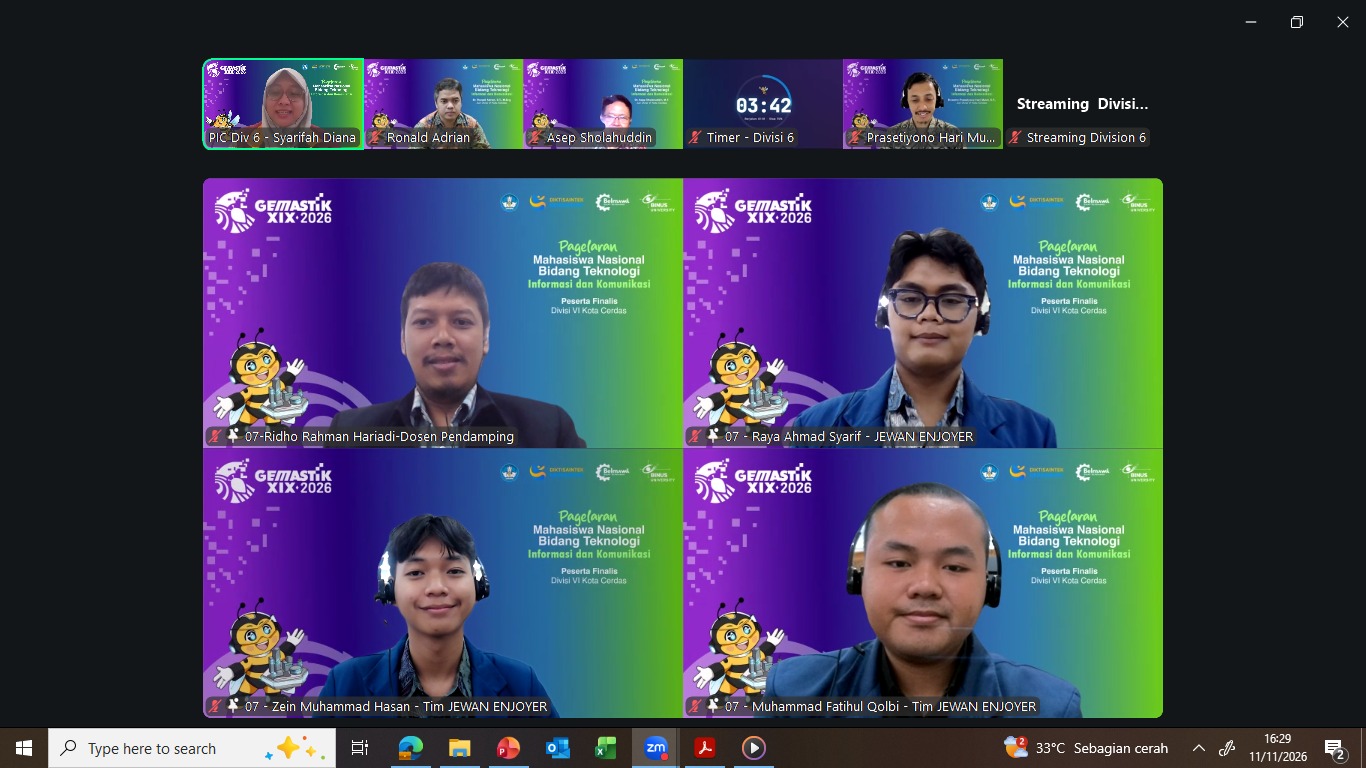
The DTI ITS team upon winning the Bronze Medal in Division VI: Smart City at GEMASTIK XIX 2026, held at BINUS University, Alam Sutera Campus, Tangerang.
The team was led by Muhammad Fatihul Qolbi Ash Shiddiqi, with Zein Muhammad Hasan and Raya Ahmad Syarif as members, both from the 2024 cohort of the Information Technology Department. Zein was responsible for mobile application development and model training, while Raya focused on web development. The team was supervised by Ridho Rahman Hariadi, S.Kom., M.Sc.
SPARTA is an autonomous Area Traffic Control System (ATCS) that uses AI to predict traffic congestion on road segments and AI agents to make decisions. These decisions are then implemented in an urban simulation powered by digital twin technology, allowing traffic congestion to be prevented before it occurs. The system is also equipped with a public application that enables users to report traffic conditions and receive alternative routes (rerouting).
The idea originated from traffic congestion in Surabaya and its surrounding areas, where many road users often find themselves stuck in traffic. In response, the team developed a system that integrates Surabaya’s existing facilities and infrastructure with AI-based predictive technology. Zein explained that the autonomous approach is one of the key strengths of their innovation.
“We use AI agents and autonomous technology so that decisions can be made based on data, more quickly, and with minimal errors,” he explained.
For Zein and Raya, this was not their first time participating in GEMASTIK. The two had previously competed together in the Smart City division last year but had not managed to advance to the final round. This year, Fatihul Qolbi invited the team to participate again well in advance. Beyond their enthusiasm to gain experience and represent ITS, they chose the Smart City division because it is one of the flagship fields of the Information Technology Department.
“The main motivation was our desire to give it a try and participate as representatives of ITS. Within the Information Technology Department, Smart City is one of its flagship divisions,” Zein said.
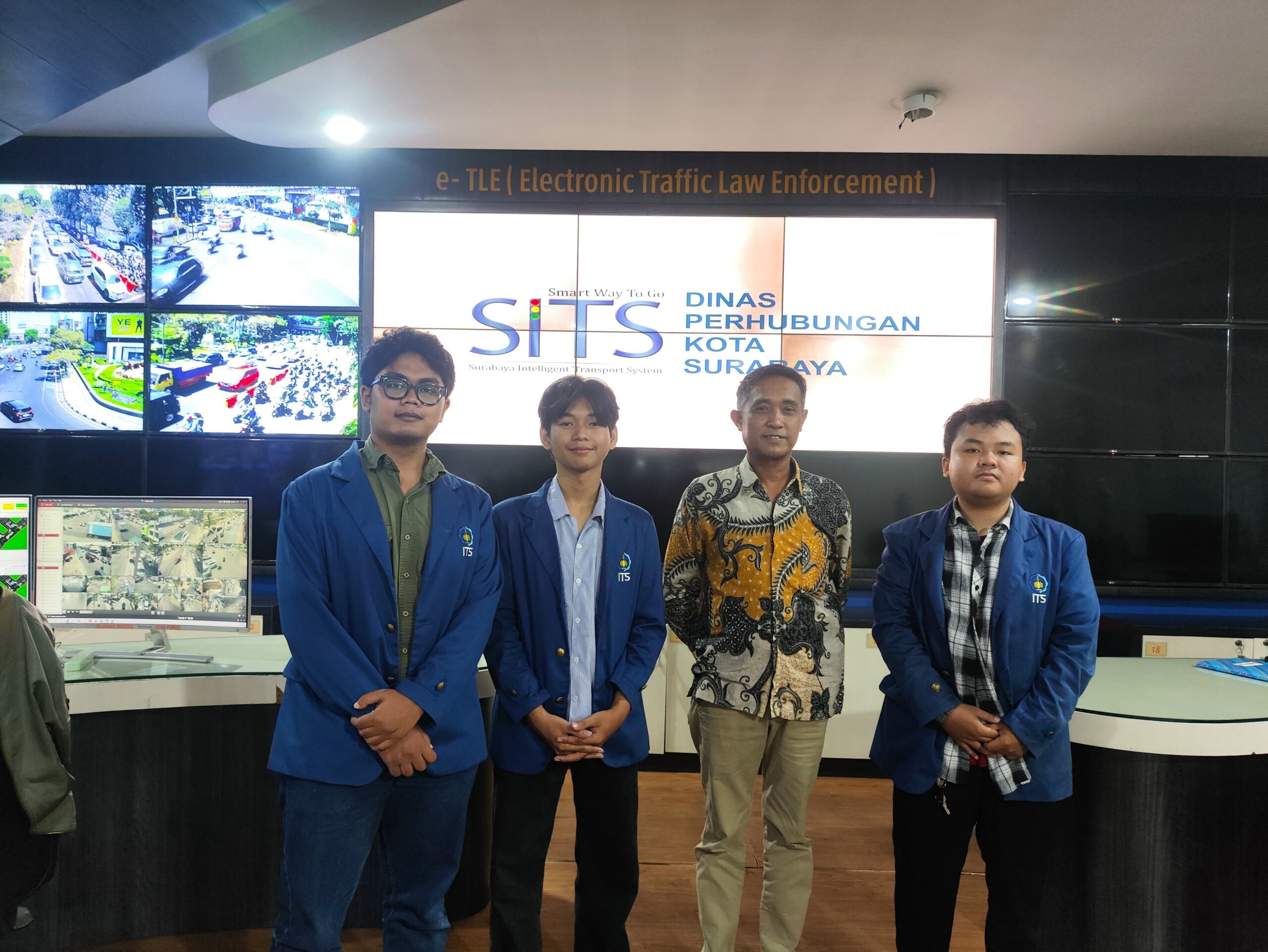
The DTI ITS team discussing the SPARTA design with Mr. Sugeng, Head of the Traffic Division at the Surabaya City Transportation Agency’s Surabaya Intelligent Transportation System (SITS).
The team’s journey to the final round began with learning from previous winners and discussing their ideas with senior students who had won the competition in earlier years. The concept was continuously refined until the team successfully qualified for the finals. Following this achievement, the team attended weekly mentoring sessions with their supervisor to further develop the idea and finalize the video concept.The team also visited the Surabaya City Transportation Agency and the Sidoarjo Regency Transportation Agency to discuss the potential implementation of SPARTA in real-world traffic management. According to Zein, the biggest challenge was developing an idea that was never truly finished and required continuous refinement, even after the team qualified as finalists. “Reaching out to stakeholders was also challenging because interviewing them was not that simple. It required thorough preparation and adherence to the existing bureaucratic procedures,” he explained.
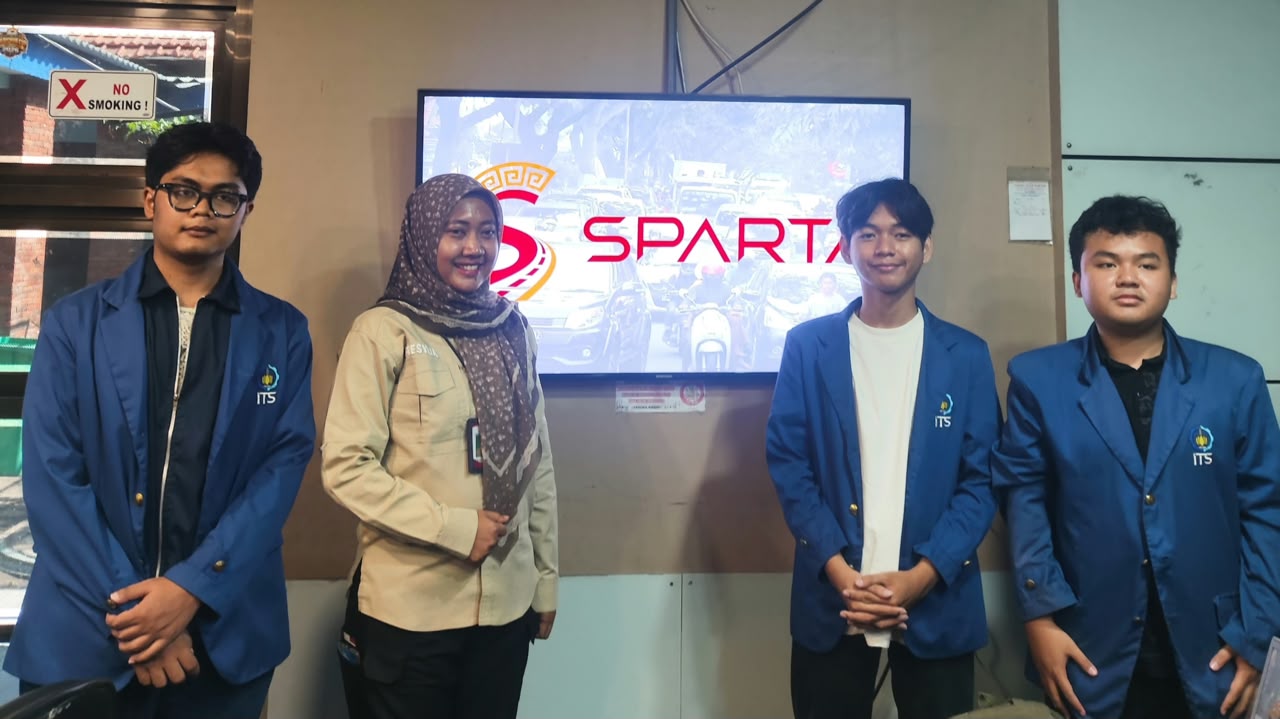
The DTI ITS team visited the Sidoarjo Regency Transportation Agency to discuss the implementation of SPARTA with Presylia, Head of Traffic Management and Engineering.
Zein highlighted that the guidance provided by the team’s supervisor, Ridho Rahman Hariadi, M.Sc., was one of the key pillars supporting their achievement. Ridho provided valuable feedback throughout the development process to help refine the idea and also accompanied the team during the final presentation. In the days leading up to the final round, the team frequently stayed up late to prepare and finalize their concept.
“On the day of the final presentation, we were extremely nervous, especially during the medal announcement. However, we were happy because all the hard work we had put in had finally paid off,” Zein said. He added that teamwork, consistency, the supervisor’s guidance, and prayers were the main factors behind their achievement.
Zein also encouraged fellow ITS students to remain enthusiastic about creating innovations and participating in competitions.
“Even when things feel difficult and tedious at first, keep going with patience and continue encouraging one another. I hope the younger students can carry on this journey and achieve even greater results to bring pride to our alma mater,” he said.
As a follow-up, the team has held discussions with the Transportation Agency. Should the agency be interested in further developing the idea, the team is ready to contribute and assist in bringing SPARTA to life in Surabaya.
Contributions to the Sustainable Development Goals (SDGs)
- SDG 9: Industry, Innovation, and Infrastructure — Through the development of SPARTA, which leverages predictive AI, AI agents, and digital twin technology to enable data-driven traffic management.
- SDG 11: Sustainable Cities and Communities — Through efforts to prevent traffic congestion in Surabaya and provide a public application for traffic reporting and alternative route recommendations.
These contributions reflect the team’s commitment to technological innovation and more sustainable urban management. However, the implementation of SPARTA in Surabaya in collaboration with the Transportation Agency remains open for further exploration.
Reporter: Maitasya Rohmatul Ula
=================================================================
Information provided by :
Department of Technology Information
Website: its.ac.id/it
Instagram: its_teknologi_informasi
Youtube: Teknologi Informasi ITS