DTI ITS Provides a Global Experience Through International Student Internships at the KCKS Laboratory
Published on
Monday, 2 November 2026
Surabaya, IT Journalistic — Three of several international students currently undertaking internships at the Department of Information Technology (DTI), Faculty of Intelligent Electrical and Informatics Technology (FTEIC), Institut Teknologi Sepuluh Nopember (ITS), namely Ewan Mendes Da Silva, Adam Mzabi, and Sami M’halla, presented their weekly project progress on Monday (October 26, 2026), at 8:30 AM at the ITS Directorate of Global Partnerships (DKG). The presentation was attended by their academic supervisors, Fuad Dary Rosyadi, S.Kom., M.Kom., and Ridho Rahman Hariadi, S.Kom., M.Sc., as well as two guest lecturers from Université Polytechnique Hauts-de-France, France, Prof. Iyad Dayoub and Prof. El Hadj Dogheche. The session aimed to monitor the progress of their projects throughout the internship program, which will run until December 2026.
The three students are working on a network security project, focusing on developing an Intelligent Security Operations Center (SOC) at the Smart City and Cybersecurity Laboratory (KCKS) of DTI ITS. The project involves several stages, ranging from system development and attack simulations to designing detection rules and leveraging machine learning to improve detection performance.
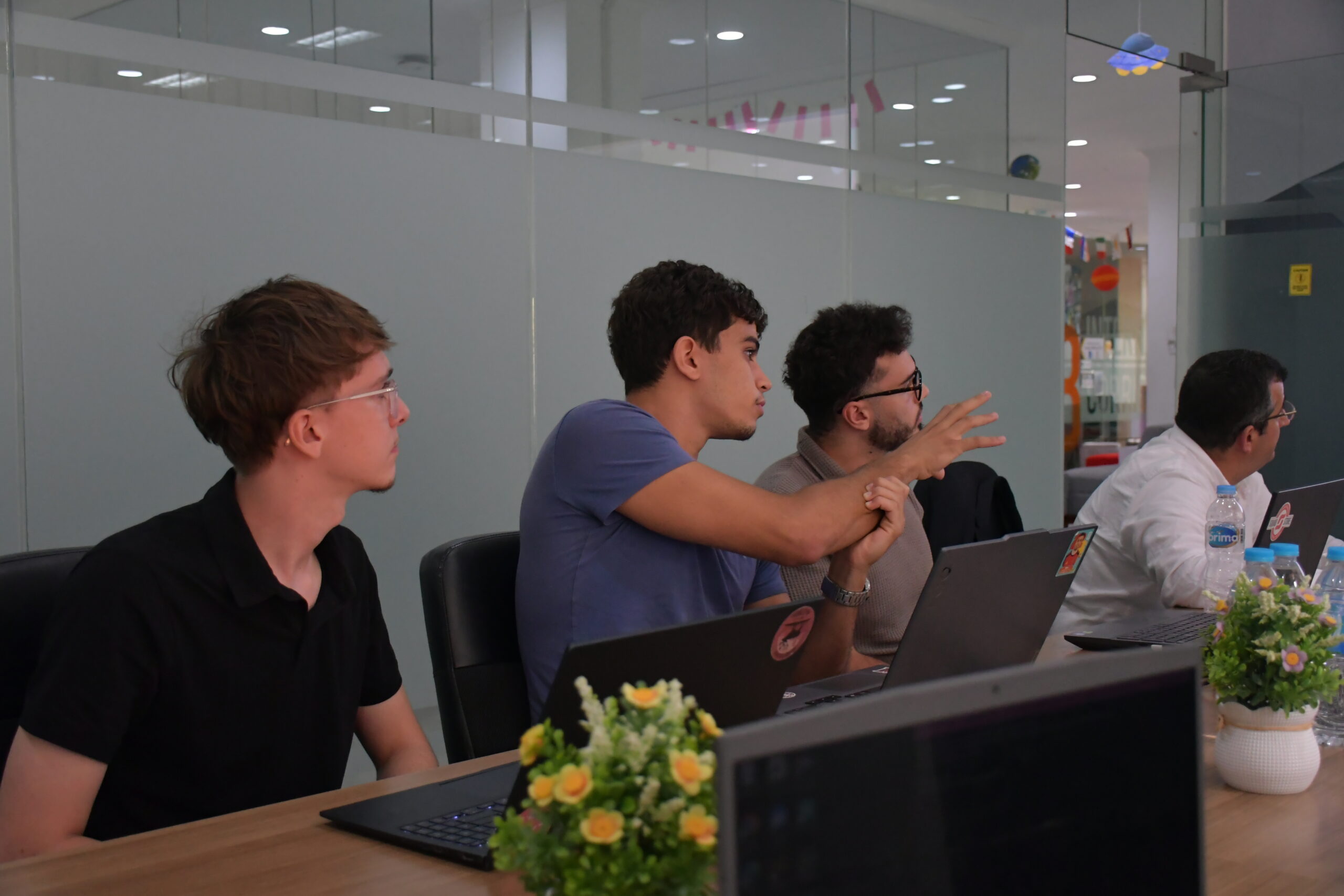
Ewan Mendes Da Silva, Adam Mzabi, and Sami M’halla, international students undertaking internships at the ITS Department of Information Technology, presented their weekly progress on the Intelligent Security Operations Center (SOC) project at the ITS Directorate of Global Partnerships (DKG) on Monday (October 26, 2026).
During the session, the three students presented their achievements throughout the internship, outlined their upcoming plans, and explained the division of responsibilities within the project. Their presentations received positive feedback from both ITS lecturers and the guest lecturers.
In addition to their appreciation, constructive feedback was also provided by the two guest lecturers from Université Polytechnique Hauts-de-France, who served as mentors for the students. Prof. Iyad Dayoub and Prof. El Hadj Dogheche listened to the presentations and raised questions regarding the project transfer process and the reliability of the project’s outcomes. They also offered suggestions on improving the students’ public speaking skills during presentations. The professors expressed their hope that this internship opportunity would continue to develop and expand in the future.
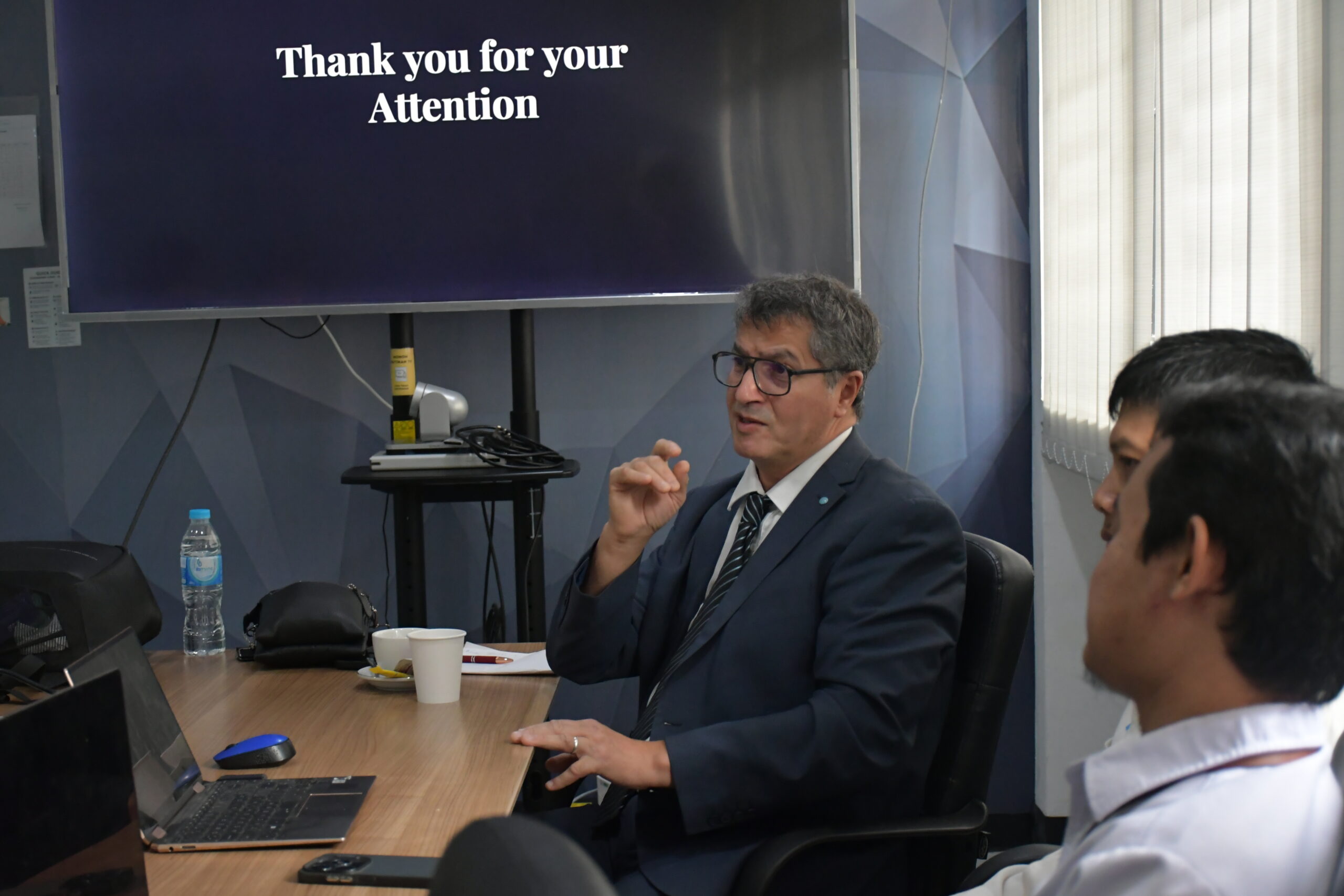
Prof. El Hadj Dogheche, Fuad Dary Rosyadi, S.Kom., M.Kom., and Ridho Rahman Hariadi, S.Kom., M.Sc., listen to and provide feedback on the students’ presentations during the weekly progress session at ITS DKG.
As a DTI academic supervisor, Fuad explained that he guides the students through regular weekly discussions while also giving them the freedom to explore independently. To support their work, the laboratory provides virtual machines (VMs), allowing the students to work directly within the laboratory environment.
Throughout the process, the biggest challenge has been communication. According to Fuad, neither the lecturers nor the students are native English speakers, which sometimes makes repeated clarification necessary. Differences in working styles also present a challenge, as international students are accustomed to having clear and explicit targets. Therefore, goals and schedules are agreed upon from the beginning, and the outcomes of each discussion are documented to ensure that everyone shares the same understanding.
Fuad has observed significant progress among the students, particularly in their understanding of network intrusion detection and prevention systems (Intrusion Detection System/Intrusion Prevention System or IDS/IPS). “Initially, they were still learning the basic concepts of IDS/IPS. Now, they are able to set up the environment and the necessary tools, and are currently conducting trials using external datasets,” he explained.
Beyond technical aspects, supervising students from different cultural backgrounds has also provided Fuad with valuable learning experiences. He noted that the international students are very open in expressing their opinions. “What I have learned is that they are very straightforward in expressing their opinions. This made me realize the importance of two-way discussions and clearly communicating expectations,” he said.
Fuad encouraged international students to make the most of this opportunity, not only by developing their technical skills but also by getting to know Indonesia and building connections. Meanwhile, his message to DTI students was clear: “Technical skills alone are not enough. Communication and the courage to step out of your comfort zone are equally important.” He also expressed his hope that the program would continue in the future, allowing DTI students to have similar internship opportunities abroad.
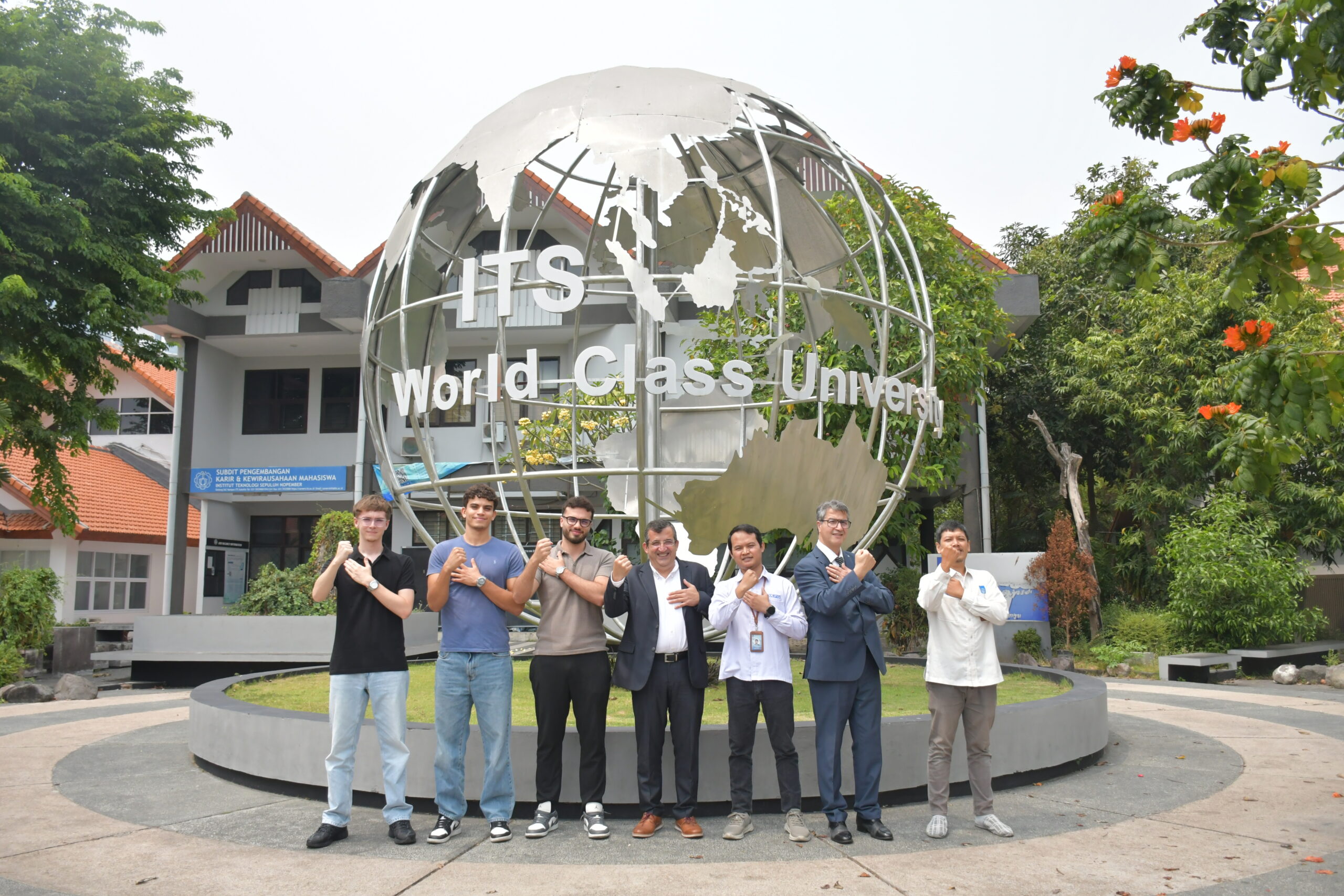
From left to right: Ewan, Adam, Sami, Prof. Iyad Dayoub, Fuad Dary Rosyadi, S.Kom., M.Kom., Prof. El Hadj Dogheche, and Ridho Rahman Hariadi, S.Kom., M.Sc., pose for a group photo following the weekly progress presentation at ITS DKG. The event brought together international students, DTI ITS academic supervisors, and guest lecturers from Université Polytechnique Hauts-de-France.
Before the program concludes in December, the students are expected to complete a technical report and an analysis of the SOC implementation results within the KCKS laboratory network. This cross-border collaborative experience is expected to serve as valuable preparation and open up future career opportunities for both international students and DTI students.
“International internships at DTI are not just about knowledge transfer, but also about experiencing new cultures and ways of thinking, allowing everyone involved to grow together,” Fuad concluded.
Contributions to the Sustainable Development Goals
-
SDG 4: Quality Education, through international internship supervision and cross-cultural learning experiences that enhance students’ technical and communication skills.
-
SDG 9: Industry, Innovation, and Infrastructure, through the development of an Intelligent Security Operations Center (SOC) at the KCKS Laboratory, involving attack simulations, the development of detection rules, and the application of machine learning to strengthen network security.
-
SDG 17: Partnerships for the Goals, through collaboration between students and lecturers from Indonesia and France on a joint project.
These contributions demonstrate the program’s role in advancing education and international partnerships. Meanwhile, opportunities for DTI students to participate in overseas exchanges and further collaboration with the guest lecturers’ institutions remain open for future exploration.
Reporter: Tsaldia H.
=================================================================
Information provided by :
Department of Information Technology
Website: its.ac.id/it
Instagram: its_teknologi_informasi
Youtube: Teknologi Informasi ITS