Driving Digital Learning, DTI ITS Equips UNISMA Lecturers with AI Utilization
Published on
Tuesday, 29 September 2026
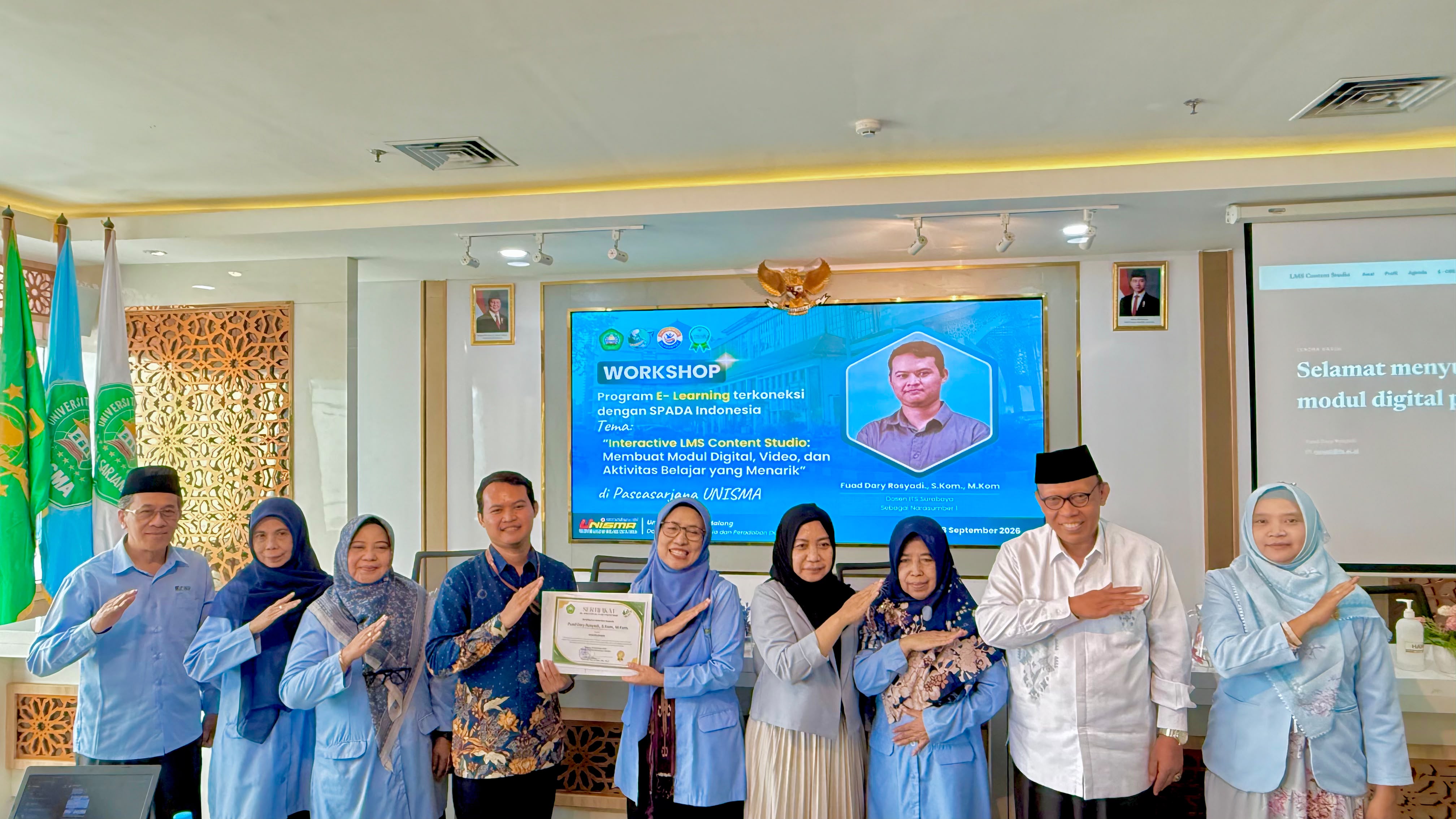
Certificate presentation to Fuad Dary Rosyadi, S.Kom., M.Kom. (fourth from the left), alongside the lecturers and committee members of the UNISMA Postgraduate School following the E-Learning Workshop.
ITS Campus, ITS News — The development of information technology and digital transformation demands higher education institutions to provide effective, adaptive, and integrated digital-based learning. Answering this challenge, a speaker from the Department of Information Technology (DTI) at Institut Teknologi Sepuluh Nopember (ITS) was present to share his knowledge in the “E-Learning Workshop – Interactive LMS Content Studio: Creating Interesting Digital Modules, Videos, and Learning Activities” on September 28, 2026.
The event, held at the Postgraduate School of Universitas Islam Malang (UNISMA), is part of UNISMA’s 2026 Excellent Program. This workshop was specifically attended by lecturers from eight study programs within the UNISMA Postgraduate School, including the Master’s in Indonesian Language Education, Master’s in English Education, Master’s in Law, Master’s in Management, Master’s in Administrative Sciences, Master’s in Islamic Religious Education (PAI), Master’s in Islamic Family Law (HKI), and the Doctoral Program in PAI.
Event Coordinator, Dr. Sri Wahyuni, M.Pd., stated that UNISMA is committed to improving the quality of digital learning through the development of e-learning-based content using a multimodal approach. This approach integrates various forms of communication such as text, visuals, audio, video, and interactive elements to make the learning process more effective.
DTI ITS Lecturer, Fuad Dary Rosyadi, S.Kom., M.Kom., who attended as the resource person, presented the main topic on how lecturers can create digital learning content and assessments based on Outcome-Based Education (OBE) principles. This topic is considered crucial because many lecturers often encounter difficulties in translating Course Learning Outcomes (CPMK) and Sub-Course Learning Outcomes (Sub-CPMK) into varied Learning Management System (LMS) content that aligns with their evaluation assessments.
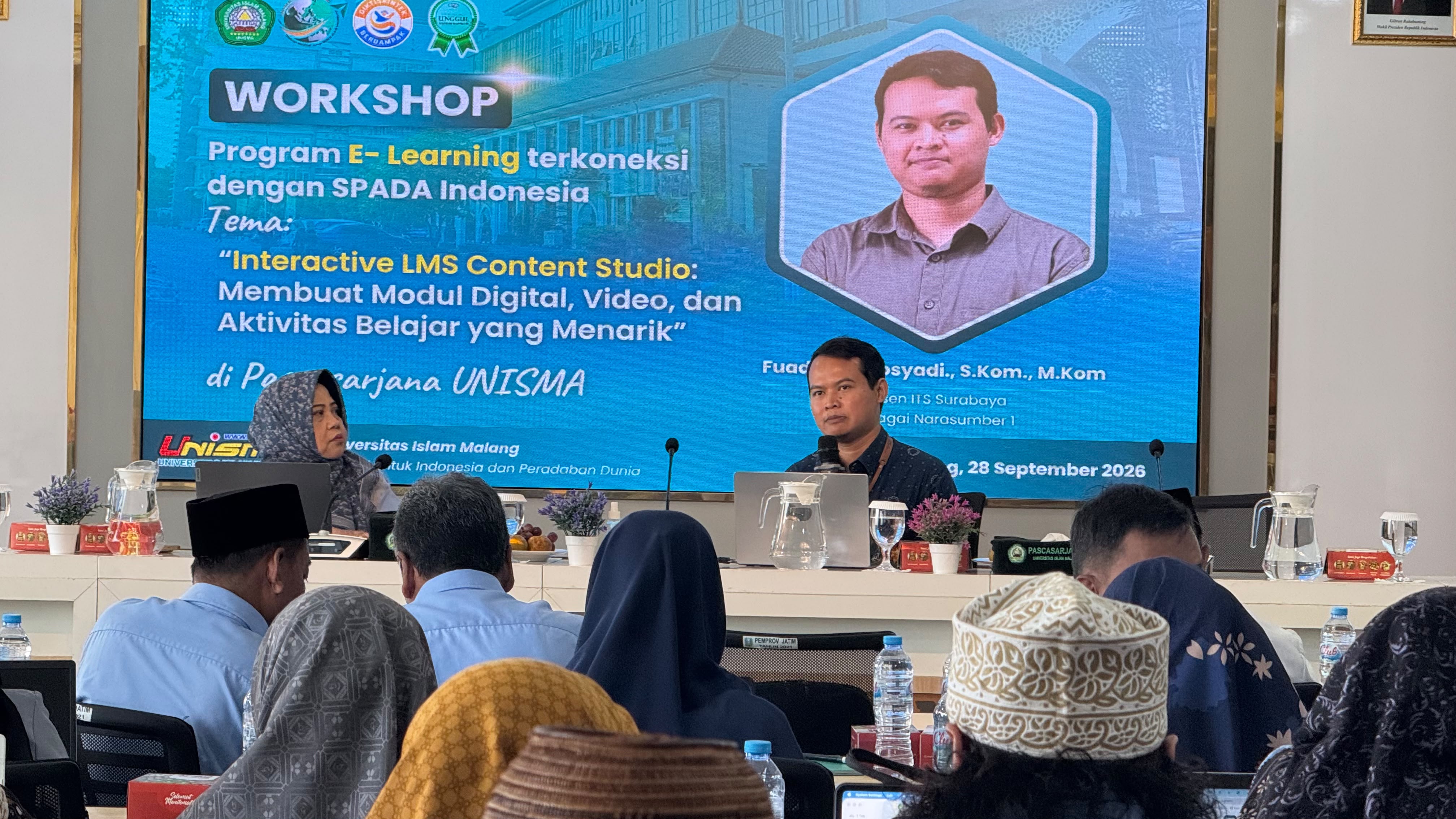
Fuad Dary Rosyadi, S.Kom., M.Kom. from ITS while presenting material on creating digital modules and interactive learning activities in front of the workshop participants.
According to Fuad, current artificial intelligence (AI) technology can significantly accelerate the process of preparing content and assessments without having to start from scratch. For example, if a lecturer has draft teaching materials in a file such as Konsep Awal.docx, the material can be further processed using AI commands (prompting) to become a comprehensive module. Through the use of AI, participants are expected to more easily map Sub-CPMKs to Bloom’s taxonomy levels, choose appropriate activities, and generate draft modules, High Order Thinking Skills (HOTS) questions, and rubrics that can be directly executed in the LMS.
During the workshop, the participants’ enthusiasm was very high, especially during the hands-on practice session. Many lecturers directly practiced using prompt builders and AI instruments like Gemini Notebook to create video content and interactive materials tailored to the courses they teach.
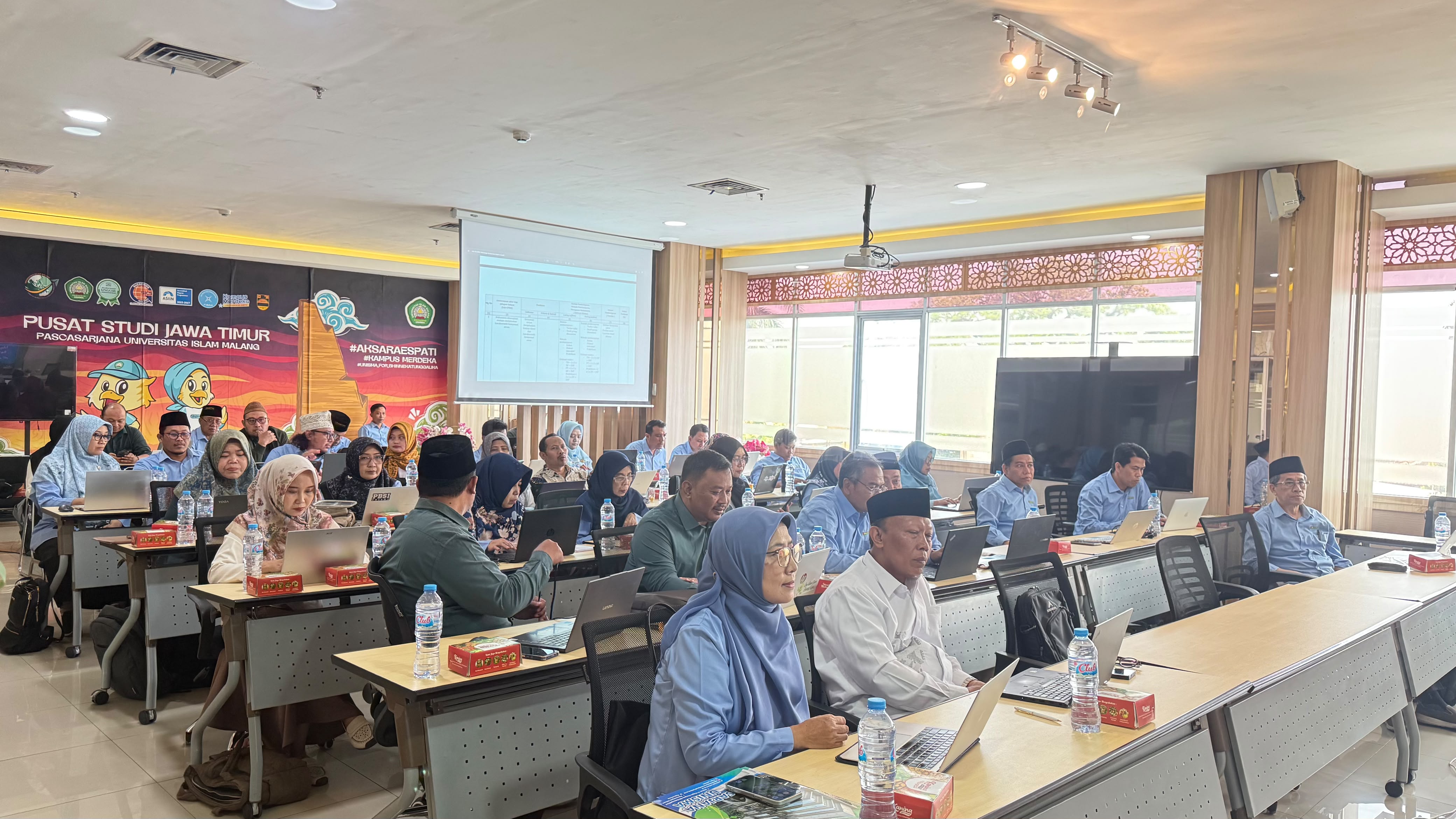
The atmosphere of the participants, consisting of UNISMA Postgraduate lecturers, focusing on the material and preparing to do hands-on practice using their respective laptops.
This activity is expected not only to improve lecturers’ skills in optimizing LMS features but also to produce high-quality and flexible digital learning content for students. Dr. Sri Wahyuni added that the ultimate goal of this optimization also includes supporting the integration of UNISMA’s LMS with SPADA Indonesia. For educational institutions, such activities are considered capable of driving more measurable learning design standards and accelerating digital learning transformation on campus.
Going forward, both parties have high hopes that the collaboration between DTI ITS and UNISMA, especially the Faculty of Teacher Training and Education (FKIP), can continue. This cooperation is expected to advance to the stage of practical implementation mentoring in their respective LMS or proceed to advanced workshops, such as AI-based evaluation and the development of a complete course.
Supporting the Achievement of SDGs
Through this activity, lecturers are expected to be more prepared to adapt to technological developments while being able to appropriately integrate AI in designing modules and learning activities. This activity also supports the achievement of SDG 4: Quality Education by strengthening the competence of educators in utilizing technology and AI to advance the transformation of digital learning in higher education.
Reporter: Balqis Sani S.
=================================================================
Information provided by:
Department of Information
Technology Website: its.ac.id/it
Instagram: its_teknologi_informasi
Youtube: ITS Information Technology