About

Published on
Friday, 13 November 2026
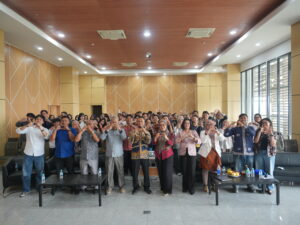
Surabaya, FTEIC ITS – On Thursday, November 12, 2026, the Department of Biomedical Engineering at ITS held a Guest Lecture with the President Director of Philips Indonesia under the theme “The Future of Healthcare in Indonesia: Technology, AI, and Human Innovation for Better Care”. The President Director of Philips Indonesia, Astri Ramayanti Dharmawan, will discuss developments in technology, Artificial Intelligence (AI), and innovations in healthcare. This guest lecture was held at Multifunction Hall, Tower 2, 11st Floor. The event was attended by students of the Department of Biomedical Engineering, particularly the classes of 2023 and 2024.
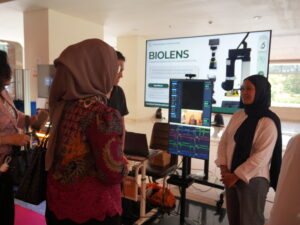
The “BME ITS Research Exhibition” was also held on the first floor of Tower 2. It showcased research by students from the Department of Biomedical Engineering across its four areas of specialization: Intelligent Instrumentation, Assistive and Medical Rehabilitation Technology, Medical Imaging and Image Processing, and Medical Informatics.
The event opened with an introduction to the Department of Biomedical Engineering by Nada Fitrieyatul Hikmah, Secretary of Biomedical Engineering Department. The presentation aimed to introduce the department and strengthen its collaboration with Philips Indonesia. It covered the department’s areas of specialization, Board of Advisors, laboratories, and alumni working at Philips Healthcare.
The event continued with a performance by Hidden Symphony, a musical ensemble from the Department of Biomedical Engineering. To welcome the Philips Indonesia delegation, the group performed “Believer” by Imagine Dragons, “A Thousand Years” by Christina Perri, and “Koyo Jogja Istimewa” by Ndarboy Genk. Both the delegation and the students in attendance enjoyed the performance.
Astri Ramayanti Dharmawan, President Director of Philips Indonesia, then discussed how health technology can expand access, increase capacity, and maintain the quality of healthcare services in Indonesia. She explained that technology design should begin with an understanding of patients’ needs and healthcare professionals’ workflows. Philips emphasized five competencies for biomedical engineers: technical expertise, clinical understanding, systems thinking, cross-disciplinary collaboration, and responsible and sustainable design.
During the Q&A session, students and faculty members showed their interest in the topic by asking questions, which Astri answered directly. She said that women have the same opportunities as men and that Philips provides equal opportunities regardless of race, religion, or background. “As long as we have a clear vision and clear career goals, we should never limit ourselves,” she said. Astri also noted that Indonesia’s healthcare industry has room to grow, supported by substantial government investment in the sector.