About

Published on
Tuesday, 27 October 2026
Information Technology students at ITS attended a guest lecture by Prof. Dr. Ir. Mohammad Nuh, DEA in the PTEIC course, which encouraged them to build a collaborative ecosystem and prepare the skills needed to face 2030.
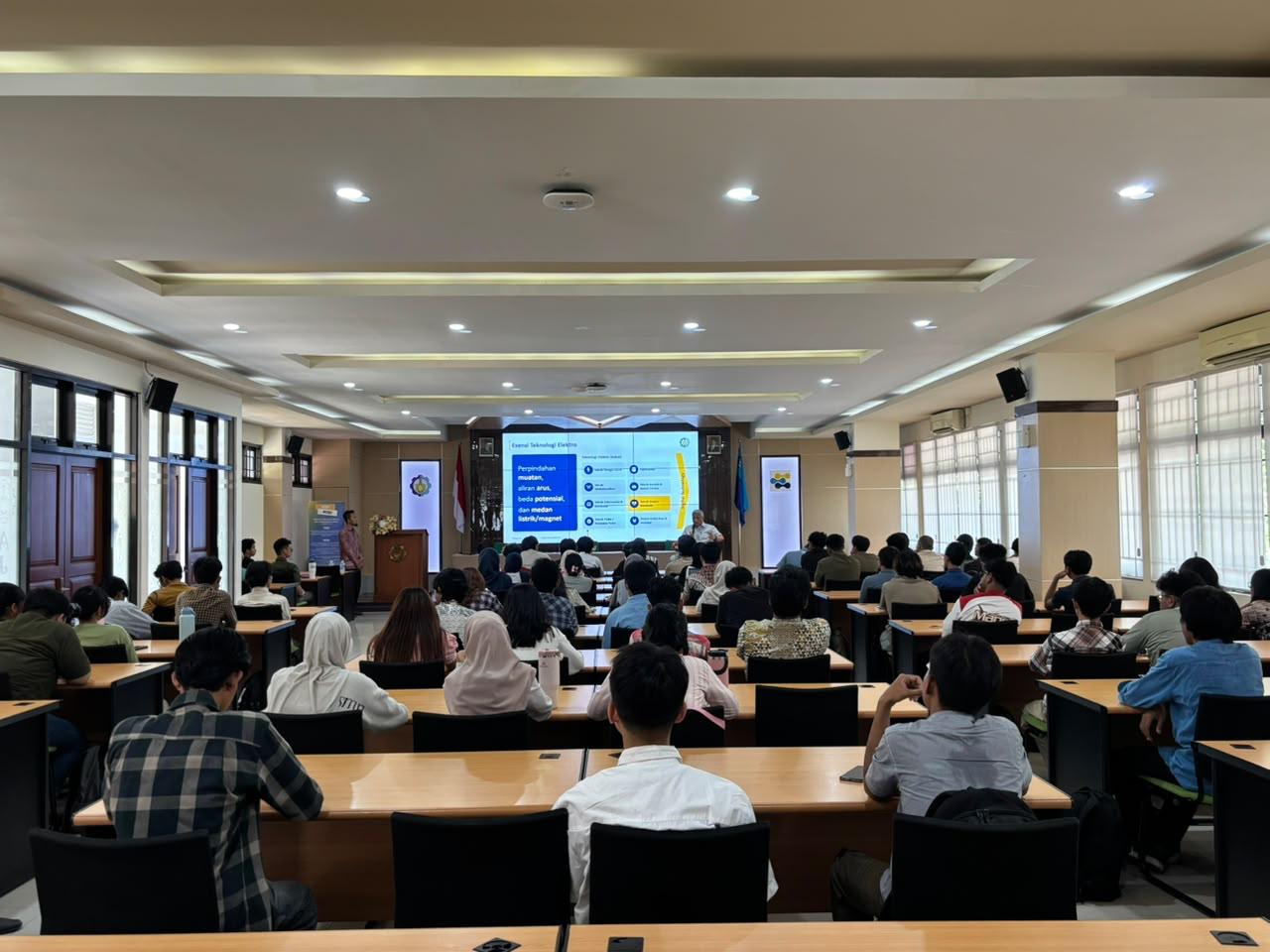
Surabaya, FTEIC ITS – FTEIC ITS students were given a special opportunity in the Introduction to Electrical Technology and Intelligent Informatics (PTEIC) course in the seventh week of lectures. The course, taught by Dr. Ir. Henning Titi Ciptaningtyas, S.Kom., M.Kom., featured a guest lecture by Prof. Dr. Ir. Mohammad Nuh, DEA under the theme Sharing Life Experiences. Unlike the previous six meetings, which focused on academic subjects such as energy, electronics, telecommunications, computational thinking, AI thinking, and the Software Development Life Cycle, this session was designed specifically as a space for character building.
At the start of his presentation, Prof. Mohammad Nuh invited students to reflect on their position as part of ITS. He touched on the privilege of being admitted to ITS, which has an acceptance rate of only 6.6%. This figure shows that not everyone gets the same opportunity to sit in an ITS classroom. For students, this discussion served as a reminder that being an ITS student is not merely a personal achievement, but also a responsibility to be carried out with sincerity.
The next topic was the shift in perspective in technology development, from competition toward a collaborative ecosystem. Until now, innovation has often been understood as a race to be the best or to dominate the market. Through this session, students were encouraged to understand that future challenges are more likely to be solved through cooperation across fields and across parties, within an ecosystem that benefits everyone. This view aligns with the material students studied in previous weeks, when energy, control systems, telecommunications, artificial intelligence, and software engineering emerged as interconnected fields.
In addition, Prof. Mohammad Nuh presented the 11 Core Skills in 2030, a set of core skills considered important to have by the year 2030. This discussion gave students a picture of the direction of future workforce and societal needs. Students were encouraged not to be content with the abilities they have today, but to start preparing provisions that will remain relevant in the years ahead.
The presentation left a deep impression on students, especially when connected to the AI thinking material from week five. In that class, students learned how computers can mimic human intelligence, for example in recommendation systems and tumor detection, as well as its impact on society. After attending the guest lecture, students realized that understanding the technical workings of AI alone is not enough. Technical ability needs to be balanced with human soft skills such as empathy, leadership, and analytical thinking.
The guest lecture also changed students’ perspective on innovation. Previously, some of them regarded technology development as merely competition and a fight for market share. Now they understand that what is needed going forward is the ability to build collaborative ecosystems that benefit all parties. At the same time, students have become more aware that computational thinking is useful not only in computer science or programming, but can serve as a foundational skill for solving problems in many aspects of life.
This session shows that PTEIC not only equips students with technical knowledge, but also shapes their mindset and character as ITS students. The combination of academic material, independent learning through videos, mind map assignments, and post tests, along with this inspiring guest lecture, is expected to help students become graduates who are adaptive, resilient, and able to collaborate optimally. (Humas-Sh)