About

Published on
Wednesday, 18 November 2026
FTEIC-ITS Malaysia, The development of artificial intelligence (AI) and digital innovation was one of the main focuses of a visit by 19 lecturers and education staff delegates from Institut Teknologi Sepuluh Nopember (ITS) to the Faculty of Computing (Fakulti Komputeran), Universiti Teknologi Malaysia (UTM), on Friday, November 13, 2026, at 2:30 p.m. local time. The visit was part of the closing series of activities of the UTM–ITS STELLAR Training, giving the ITS delegates an opportunity to broaden their insights into research developments, the use of the latest technologies, and innovation within an international university environment.
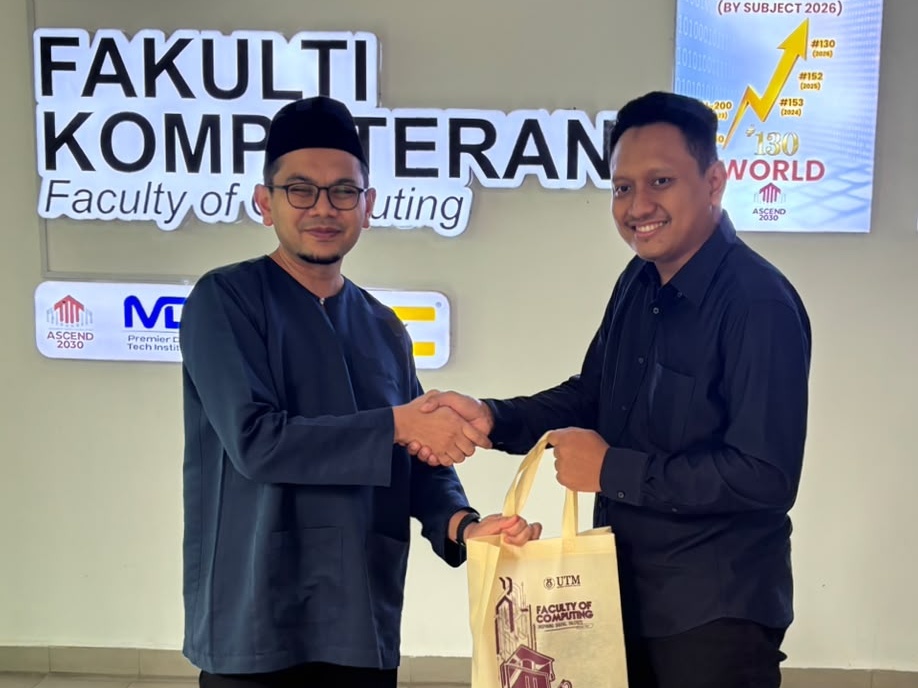
Led by Yurid Eka Nugraha, S.T., M.Eng., Ph.D., the ITS delegation was personally welcomed by Assoc. Prof. Dr. Farhan Bin Mohammed, Deputy Dean for Research, Innovation & Development of the Faculty of Computing UTM. The program began with an introduction to the faculty’s leadership and the departments within the Faculty of Computing. Through this session, the ITS delegates gained an overview of the institutional structure, fields of study, and the various educational and research activities developed by UTM.
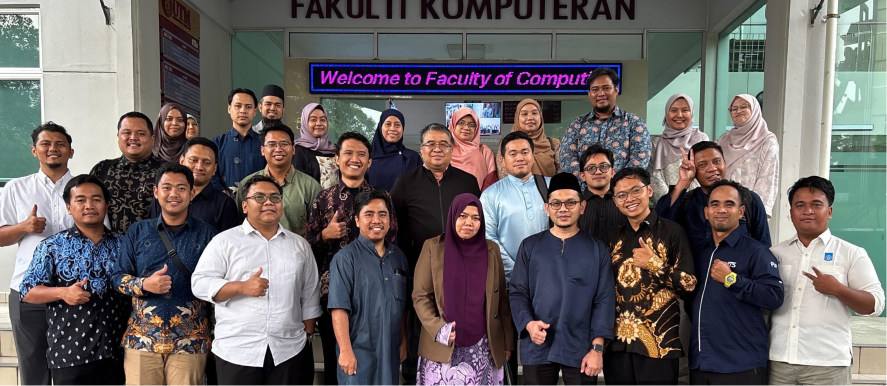
The agenda then continued with an academic discussion on various research projects currently being developed by the Faculty of Computing UTM. One of the topics that drew attention was the development of artificial intelligence (AI) technology, which is currently advancing rapidly and is increasingly applied across various sectors. The discussion gave the ITS delegates an opportunity to exchange insights on the direction of research development, the use of digital technology, and the potential for developing innovations relevant to future challenges.
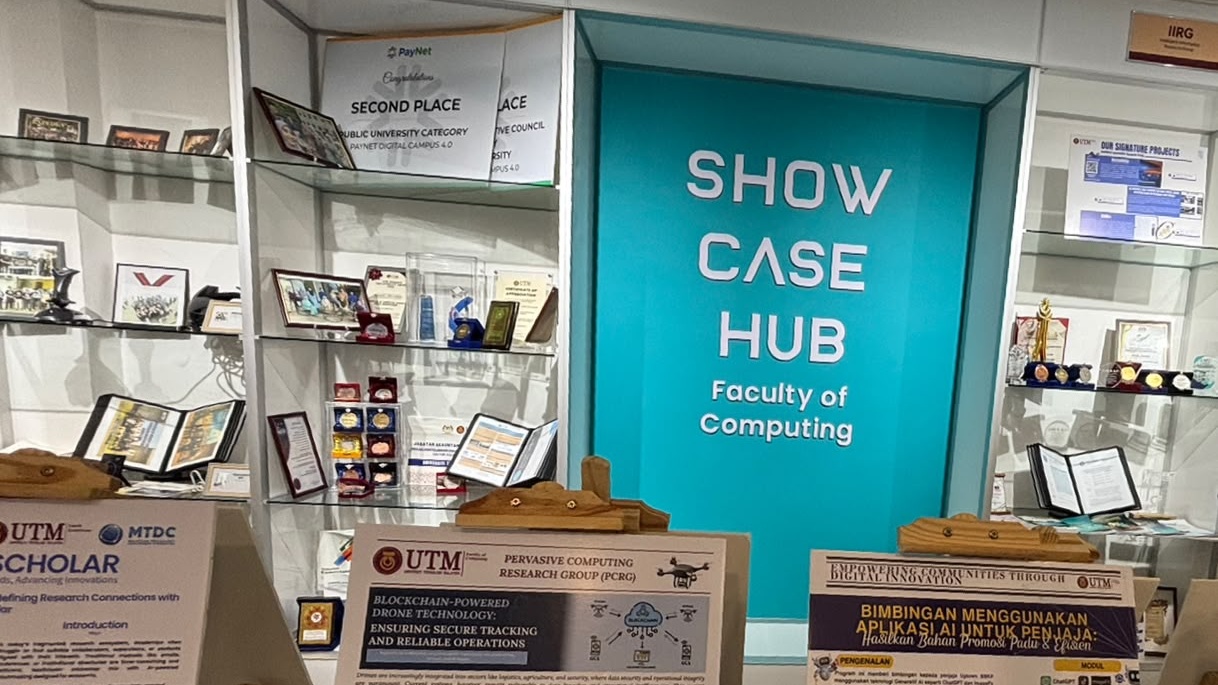
Beyond the discussions, the ITS delegates were also invited to visit the Faculty of Computing Showcase, which displays a wide range of research outcomes and technological innovations developed by UTM’s academic community. These research outcomes demonstrate how computing science is used to produce technological solutions that can be applied to meet societal needs and industry developments.
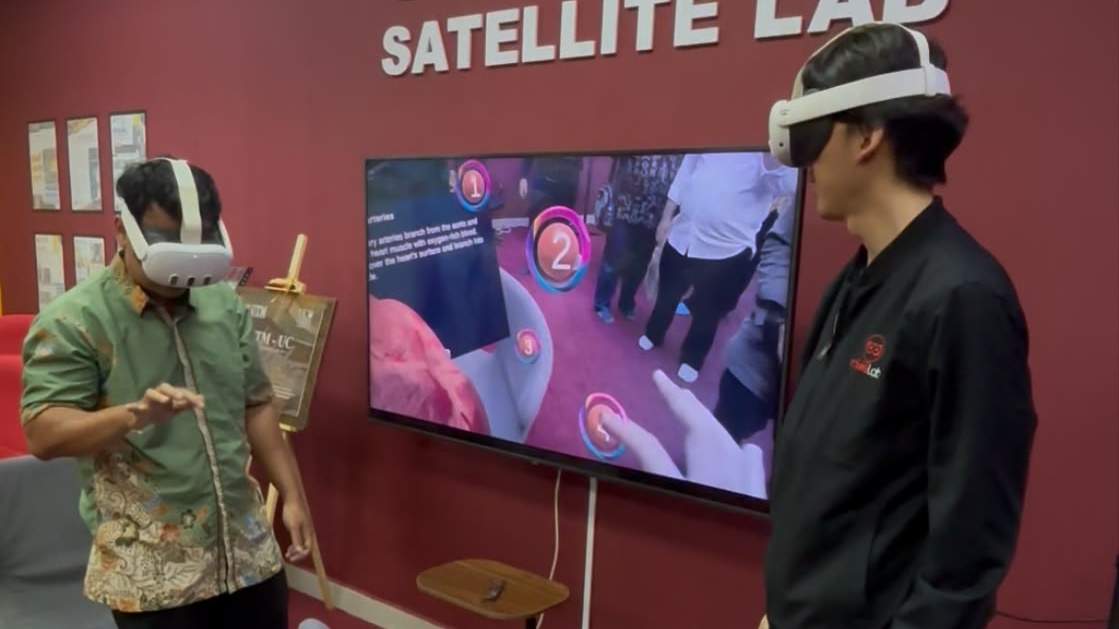
One part of the visit that drew particular attention was the UTM-UC Satellite Lab. At this facility, the ITS delegates were introduced to the use of Virtual Reality (VR) technology in the health sector, particularly for visualizing the human heart. Through this technology, the structure and parts of the heart can be studied more interactively through a three-dimensional visual experience. This introduction shows how computing technology can be developed and utilized to support learning, simulation, and innovation in the health sector.
This series of visits gave the ITS delegates direct experience of the research and technology development ecosystem at the Faculty of Computing UTM. The combination of academic discussions, introductions to research outcomes, and technology demonstrations served as a learning opportunity to understand how university research can be developed into innovations with real benefits.
Through the UTM–ITS STELLAR Training, this visit is expected not only to enrich the knowledge and international insights of ITS lecturers and education staff, but also to encourage new ideas in the development of education, research, and technological innovation. The experience gained is expected to contribute positively to improving academic quality and institutional governance at ITS, particularly at the Faculty of Intelligent Electrical and Informatics Technology (FTEIC).
This visit also serves as a moment to strengthen academic relations between ITS and UTM and to open wider opportunities for cooperation, especially in research, digital technology development, artificial intelligence, and interdisciplinary innovation. In this way, the exchange of knowledge and experience between universities is expected to become one of the strategic steps in strengthening the competitiveness of higher education at the international level.(Humas-Sh)